East Ham House Clearance in East Ham

East Ham house clearance is a practical service for removing unwanted contents from homes, flats and outbuildings in a way that is organised, respectful and easy to plan. Whether you are clearing a whole property or dealing with a few bulky items, our service focuses on separating reusable items, suitable materials and general waste so the work can be handled efficiently. It is a straightforward way to regain usable space without having to manage the labour, loading and disposal yourself.
We handle house clearance work for different property sizes, from compact flats to larger family homes, and we can also support related clearances where the contents are spread across more than one room or storage area. If you are comparing options, it helps to think about what needs moving, what can stay, and what may need special handling. For a clear starting point, you can request a quotation once you know the main items involved.
Our approach is built around sensible preparation and clear communication. For many jobs, the most useful information is simply a rough idea of room count, item type and access conditions. If there are larger pieces such as wardrobes, sofas or white goods, mentioning them early helps the work be planned properly. You can also use the site navigation to review home clearance details and see how the service is grouped across residential property types.
House clearance work for homes, flats and shared spaces
We provide clearance for occupied, empty and partially furnished properties, with the aim of leaving each space ready for whatever comes next. That may involve a full property clearance after a move, a probate-related clear-out, or the removal of accumulated items from a household that has simply built up over time. The work is planned around the layout of the property, the volume of contents and any access considerations such as stairs, narrow halls or limited parking.
Because every property contains a different mix of items, we look at the clearance as a sorting job as well as a removal job. Some contents may be suitable for reuse or specialist disposal, while other material may be better routed into general waste streams. The overall aim is to keep the process orderly and reduce unnecessary handling. If you need to compare related services, the page for flat clearance is a useful reference for smaller or upper-floor homes.
What can be included in a domestic clearance
A domestic clearance can cover furniture, soft furnishings, kitchen items, ornaments, books, storage box contents and other household belongings that are no longer needed. It can also include bulky pieces that are awkward to move without help, such as beds, wardrobes, cabinets and tables. Where there are mixed items in one room, the work is usually more efficient when the main categories are identified in advance so the right approach can be chosen for loading and disposal.
Planning a clearance with the right level of support

Not every property needs the same amount of input. Some customers want a full clearance from top to bottom, while others only need selected rooms emptied or a few heavy items removed. That is why it helps to define the scope early. We can then work from a clear description of what stays, what goes and whether any contents need to be treated with particular care because of size, weight or condition. If the job is being done ahead of sale, refurbishment or a tenancy handover, the scope can be matched to the timetable.
For properties with several levels or difficult access, it is sensible to mention those details when asking for a quotation. Stairs, parking constraints, basement rooms and loft access can all affect the practical planning of a clearance. A concise list of the items involved is often enough to get started, but photographs can also be useful where the contents are spread across several rooms. If your needs include storage areas above the main living space, have a look at loft clearance as a related service.
Useful details to include:
- the type of property and how many rooms are involved
- any particularly heavy or awkward items
- whether the property is occupied or empty
- stairs, parking or access restrictions
- the preferred timing for the work
Furniture removal and disposal as part of the service
Furniture is often the main part of a house clearance, especially where a property contains old or unwanted beds, wardrobes, sofas, shelving and dining pieces. We can remove individual items or include them within a wider clearance if the whole room or property is being emptied. Where possible, items are assessed so that suitable pieces can be separated from mixed waste, making the process more organised and easier to manage from start to finish.
Some furniture is straightforward to move, but larger items may need dismantling or careful handling to avoid damage to walls, flooring and doorways. This is particularly relevant in homes with tight staircases or long internal routes from the rooms to the exit. If furniture is the main concern, you may find the dedicated furniture clearance page helpful, while furniture disposal is useful where the job is more focused on unwanted pieces than on a full property clear-out.
The exact outcome depends on the condition and type of furniture present. Some households are mainly dealing with a few redundant items, while others need a complete removal before decorating, letting or selling. In each case, the aim is to keep the work practical and proportionate rather than overcomplicated. The service can be shaped to suit a one-off item, a single room or a more comprehensive domestic clearance plan.
Clearance for garages, lofts and awkward storage areas

Storage spaces often become the most difficult part of a property to clear because they are filled gradually and accessed less often. Garages may contain a mixture of household overflow, old equipment and broken items, while lofts can involve lighter contents packed into awkward corners. Clearing these spaces usually means sorting through layers of stored material and moving items safely from areas with limited headroom or narrow access points.
We can include these areas within a larger house clearance or handle them as separate jobs when only one part of the property needs attention. The approach depends on how full the space is, whether items are boxed or loose, and whether there are any fragile or heavy contents that need extra care. For further detail on one of the common storage-space jobs, the garage clearance page sets out the type of work involved.
When a loft or garage is cleared properly, it is easier to see what has been kept, what should be removed and what may need sorting into different disposal streams. That makes the final stage cleaner and more manageable, particularly if the space is being prepared for practical use again rather than simply emptied. If you have contents spread across more than one storage area, the clear-out can be planned as a single visit where that is the most efficient option.
How we deal with waste and reusable contents
House clearance is not only about removal; it is also about choosing the right route for each type of item. Household contents vary widely, so the work may involve separating furniture, bagged waste, reusable items and materials that need different handling. This makes the job more orderly and helps avoid treating every item as though it belongs in the same category. The practical outcome is a tidier process and a clearer finish.
Where a property contains items that are no longer wanted but are still in reasonable condition, it can make sense to separate them from broken or unsuitable material before the main loading stage. That is one reason why a clear description of the contents is useful when arranging a quotation. If your project includes general removal as well as house contents, you can also review waste removal for a broader overview of the service grouping available on the site.
For many customers, the main question is not simply how much is being removed, but what kind of removal is involved. A small number of items can be dealt with differently from a full household clearance, and that affects the planning. If you are unsure whether the work falls under furniture-only, room-by-room or whole-property clearance, a brief outline of the contents is usually enough to narrow it down before a quotation is prepared.
Pricing factors and how quotations are prepared
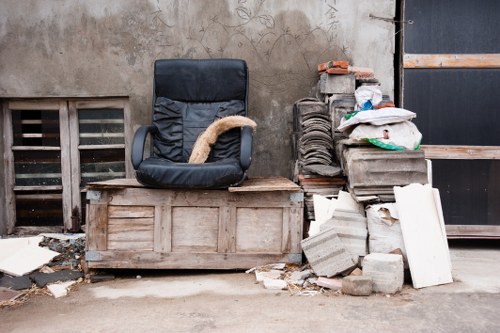
Prices for house clearance work are usually shaped by the amount and type of material to be removed, the time needed to carry it out, and the access conditions at the property. A simple job with a few standard items is different from a clearance that involves multiple floors, dense storage or especially bulky pieces. Because each job varies, quotations are best based on the actual scope rather than a one-size-fits-all assumption.
When requesting a quotation, it helps to describe the rooms involved, any item categories that stand out, and whether there are constraints such as shared entrances or limited parking. That allows the work to be assessed in a sensible way before anything is scheduled. If you are checking practical terms as well, the pricing and quotes page is a useful place to review how requests are handled and what information is typically needed.
A good quotation process should feel clear rather than complicated. The more accurately the job is described, the easier it is to match the right amount of labour to the work in hand. Simple, direct details are often the most helpful: what is being cleared, how much there is, and whether there are any awkward features of the property. That is enough to start a proper conversation about the clearance.
Choosing the right type of clearance for the property
Different homes call for different approaches. A compact flat may need careful handling of stair access and shared hallways, while a larger house may involve several separate rooms, loft storage and more extensive furniture removal. The best plan is the one that fits the actual property rather than trying to make every job follow the same pattern. That is why the service is flexible enough to suit selective clearances and whole-house work alike.
In some cases, customers only need one section of the property cleared before decorating or reusing the room. In others, the whole contents need removing so the space can be returned to a neutral condition. If you are comparing related domestic options, the pages for house clearance and home clearance provide a useful way to see how the service categories are arranged on the site. Both can help you decide how broad the work should be.
Where the property includes a mixture of personal belongings, furniture and miscellaneous stored items, it is usually better to group the work into logical areas rather than thinking of it as one overwhelming task. Rooms can be tackled in sequence, with the most accessible or most urgent parts addressed first. That practical approach helps keep the process manageable and makes it easier to see what is left after the main removal is complete.
Preparing a property for the next stage
Many house clearances are carried out because a property is moving into a new stage of use. It might be being sold, let, decorated, renovated or prepared after a long period of storage. In those situations, the aim is not only to remove contents but also to leave the space ready for the next step. A good clearance removes clutter, bulky furniture and general household items so the rooms are easier to assess and use.
There is no need to overcomplicate preparation, but it does help if obvious items are grouped together and anything that must remain in the property is clearly separated. If there are fragile pieces, personal documents or objects with sentimental value, those should be set aside before the main work begins. For larger or more complex properties, a short description of what is to stay and what is to go usually helps keep the visit focused and efficient.
To keep the process straightforward, it is often best to approach the job in stages:
- identify the areas that need clearing
- note any heavy or bulky items
- separate anything that should remain
- check access to doors, stairs and parking
- request a quotation once the scope is clear
About East Ham
East Ham is an established district in the London Borough of Newham in East London, with a long history shaped by suburban growth, transport links and changing patterns of settlement. The area is known for its mix of residential streets, local shopping parades and public spaces, and it sits within a wider part of London that developed rapidly as the city expanded eastwards. East Ham station, on the District and Hammersmith & City lines, helps connect the district with central London and neighbouring parts of the borough, while nearby road corridors have long supported movement through the area. The locality includes a range of housing types, from terraced streets to later residential developments, reflecting different phases of urban change. Green spaces such as Central Park and Plashet Park add open ground to a densely built environment, giving residents and visitors room for walking and everyday recreation. The district also has a strong civic identity through its libraries, schools, markets and faith buildings, which contribute to a busy and varied local character. Like much of Newham, it has experienced waves of redevelopment and demographic change, and that is visible in the area’s shops, streets and community facilities. Architectural details vary from straightforward post-war buildings to older surviving structures, so the local scene is best understood as layered rather than uniform. East Ham’s position in east London makes it part of a wider network of neighbourhoods that balance longstanding residential life with constant adaptation.
Household clearance with a clear, practical finish

Our service is designed to keep the removal side of a household project clear and manageable from the beginning. That means focusing on the items that actually need to go, the spaces they are in and the most sensible way to handle them. Whether the task is a single room, a whole property or a mix of domestic storage spaces, the work is centred on making the clearance straightforward and giving you a finished space that is easier to hand over, sort or reuse.
We also help customers think through the job before it begins, so there is less uncertainty about what the clearance will cover. If you are unsure whether the main need is furniture removal, a full house clear-out or the contents of a loft or garage, a short description is usually enough to point things in the right direction. For a direct next step, contact us to request a quotation and discuss the property in more detail.
When you are ready, the simplest approach is often the best: describe the property, note the main items and let the scope be matched to the work required. That keeps the enquiry practical and avoids unnecessary guesswork. If you want to review how the business handles policies and service details more broadly, you can also look at about us for the wider site structure and supporting information.